The Cabinet You Can See but Can't Reach: A Neighbourly Defib Walk for 2026
Most of us walk past a public defibrillator without really seeing it. It might be a bright yellow cabinet beside a village hall, a white box near the Co-op, or a small sign on a sports club wall. We notice it in the way we notice a fire extinguisher: vaguely reassuring, not personally relevant. That is exactly the right attitude for everyday life — but it is worth spending five minutes turning vague reassurance into useful local knowledge.
A public access defibrillator, often called an AED, is designed for anyone to use. You do not need a medical background. If someone collapses and is not breathing normally, the ambulance call handler can talk you through CPR and point you towards the nearest cabinet. The machine itself gives spoken instructions. The trick is knowing where it is before the moment arrives — and, just as importantly, knowing whether you can actually get to it at 7pm on a Sunday.
This is not a scare story. It is a small piece of neighbourhood admin, like knowing where the postbox is or which corner shop sells stamps. Here is how to do a gentle defib audit on your next errand run.
Start with the map, then trust your feet
The British Heart Foundation's The Circuit is the national defibrillator network used by NHS ambulance services in the UK. It is the first place to look, and many local councils also list public cabinets on their websites. Defib Finder and some council leisure trust pages are worth a glance too.
But maps are only as good as their last update. A cabinet may have been added, moved, removed, or locked inside a building since the pin was dropped. So use the map as a starting point, not a final answer. Pick a route you already walk — school run, bus stop, corner shop — and note the cabinets you pass. If one is not on the map, that is useful information, not a reason to sigh.
The five-minute errand-run audit
You do not need a clipboard. A phone note is fine. On one ordinary trip, ask yourself:
- Can I see the cabinet from the street, or is it round the back of a building?
- Is it in a place I could reach at different times of day — early morning, after work, weekend?
- Is there a clear sign, or just a small sticker on a door?
- If it is inside a shop or leisure centre, what are the opening hours?
- Does the cabinet look maintained, or has it been taped shut or left open?
If you spot a problem — a cabinet that is clearly damaged, for example — tell the venue or the local council rather than trying to fix it yourself. Public defibrillators are checked by their guardians, and fiddling with one is not a neighbourhood favour.
The locked-door problem
One of the quiet frustrations of public defibrillators is that 'public' can mean 'public during office hours'. A cabinet inside a library, community centre or gym is brilliant when the building is open. After 5pm, it may be behind a locked door. That does not make it useless — many emergencies happen when places are busy — but it is worth knowing which cabinets are genuinely 24/7.
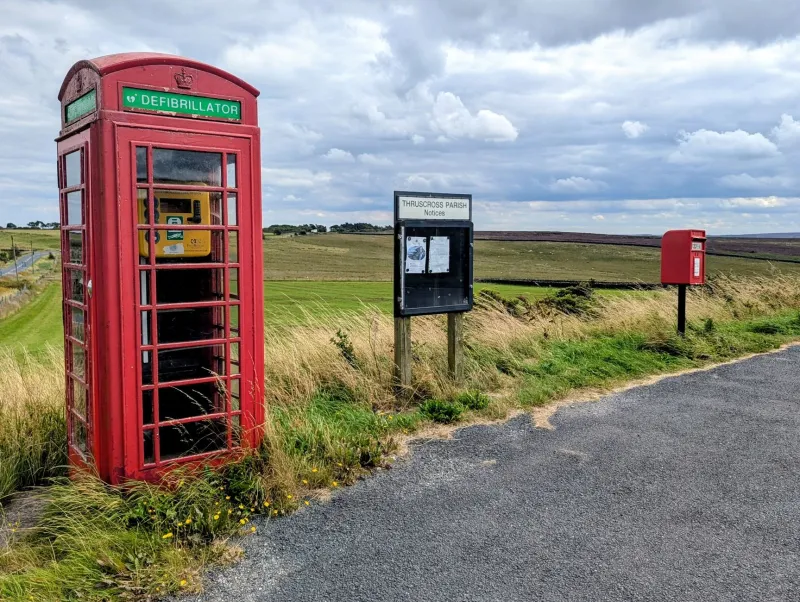
When you do your audit, note the ones you could reach at awkward hours: outside a village hall, beside a railway station, in a former phone box, on the wall of a pub that opens late. If your nearest cabinet is inside a building, ask staff where the nearest outside-the-building option is. They often know. If they do not, that is a good moment to suggest the venue checks its listing on The Circuit.
The shopkeeper who doesn't know
Here is a common scene: a small shop has a defibrillator on the wall, but the person behind the counter has never been told what it is or that it is registered. Sometimes it was installed by a previous owner, a local fundraiser, or a landlord. The cabinet is there, but the local knowledge is not.
If you are on good terms with a shopkeeper or venue manager, a light question works better than a lecture: 'I noticed the defib on the wall — is it on The Circuit? I was just checking my local route.' Registering a public defibrillator is free and helps ambulance services direct people to it. The venue can update its details on The Circuit, including opening hours and exact location. That small admin job makes the cabinet more useful to everyone.
Where to find a free CPR session
Knowing where the cabinet is matters less if nobody feels confident to start CPR. The good news is that free and low-cost sessions are easier to find than many people expect. St John Ambulance runs first aid awareness training, the British Heart Foundation has a free online CPR tool called RevivR, and many community first responder groups, libraries, leisure centres and workplaces host short sessions. Some parish councils and community hubs include a CPR demonstration in their regular programme.
Look at your local library noticeboard, the community centre newsletter, or the leisure centre timetable. If you cannot find anything, ask. A short session is often enough to replace the vague worry with a simple sequence: call 999, start chest compressions if advised, and send someone for the defibrillator.
Make it a small neighbourhood habit
You do not need to become the street's official defib warden. Just add the cabinet to your mental map, mention it to a neighbour, and check it again in a year. If your street has a WhatsApp group or a neighbourhood noticeboard, a single line — 'The defib at the village hall is outside and reachable 24/7' — is genuinely useful.
In 2026, the best neighbourhood knowledge is often the least dramatic: where the loo is, when the bus comes, which shop has a parcel drop-off, and which wall has a cabinet that could help. A five-minute audit on your next errand run is a quiet way of making your corner of the country a little more ready.