Before the Shears Come Out: A Neighbourly Hedge and Leaf Guide for 2026
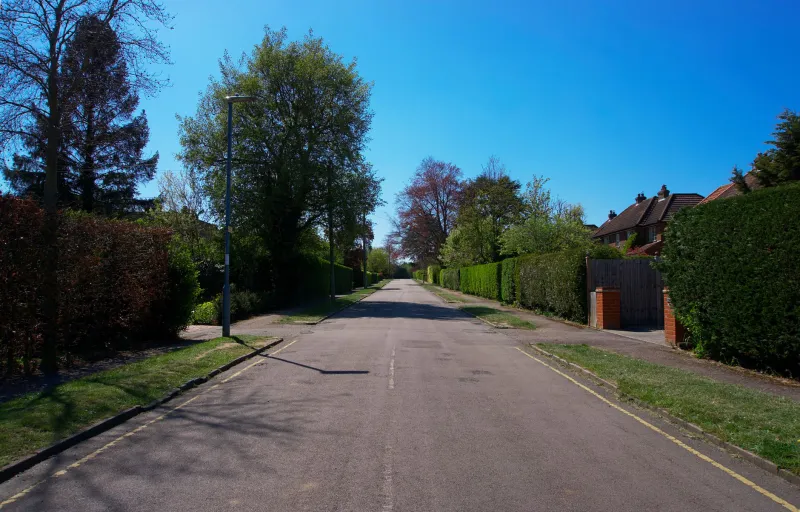
Hedges are funny things. Most of the time they are just green background noise — a bit of privacy, a bit of birdsong, a useful place for the recycling bin to hide. Then one morning you notice next door's hedge is halfway across your path, the leaves are in your gutter, and you are standing at the window composing a letter in your head. That is usually the moment to stop, put the kettle on and read this first.
Your Centre is about the small, practical stuff that keeps a neighbourhood ticking. And few things are smaller, or more likely to tick, than a hedge that has quietly got out of hand. The good news is that most hedge and leaf questions can be sorted with a friendly word, a shared plan and a bit of calm record-keeping. You do not need to become a boundary expert overnight. You just need a sensible order of events.
Start with a conversation, not a complaint
If you can, talk to your neighbour before the hedge becomes a personality trait. Choose a moment that is not 7am, not bin day and not the middle of a rainstorm. A quick knock, a wave over the fence or a note through the door is usually enough. Keep it specific and non-accusatory: 'I have noticed the hedge is coming over the path a bit — would you like to take a look at it together?' is very different from 'Your hedge is a menace.'
It also helps to ask rather than assume. Your neighbour may already have a plan, may be waiting on a gardener, or may not realise how far the growth has reached on your side. If the hedge sits on a boundary you are both unsure about, say so honestly. Boundaries in older streets can be surprisingly fuzzy, and a conversation is a much cheaper way to find that out than a formal letter.
Take a few photos, keep a few notes
This is not about building a case. It is about avoiding confusion later. A dated photo of the hedge, the path and the leaves at different times of year can be genuinely useful if you end up agreeing a shared plan or asking the council for guidance. Keep a short note of what was said and when — not a dramatic diary, just a few lines in your phone. 'Spoke to next door on Saturday; they are happy for me to trim my side in October' is enough.
If you exchange messages, keep them civil and clear. It is amazing how quickly a friendly text can be misread. Avoid sarcasm, avoid emojis that could go either way, and stick to practical details: dates, heights, who is doing what and whether a skip or a garden waste collection is needed.
Know what you are actually dealing with
A hedge is not automatically a legal boundary. It is a plant. It may sit on your land, on theirs, or somewhere in the middle where old deeds and garden history get a bit hazy. If you are unsure, your local council can usually point you towards the right guidance, and the Land Registry can help with registered titles. For most everyday hedge questions, though, the practical answer is simpler: agree what needs doing, who will do it and when.
In England and Wales, there is legislation around high hedges that can be used when informal routes have failed. Scotland has its own high hedges process. This is not the first port of call, and it is not a quick fix. It is there for cases where a hedge is seriously affecting light or enjoyment of a property and neighbours cannot agree. Think of it as the backstop, not the opening move.
If you are worried about a hedge blocking a pavement, a sightline at a junction or a public right of way, report it to the council's streets or highways team. That is a public safety issue rather than a private garden dispute, and councils generally want to know about it.
Share the trimming, share the cost, share the tea
Some of the best hedge arrangements are almost embarrassingly simple. One neighbour trims the top, the other clears the clippings. Someone borrows a long-reach trimmer from the local tool library. A group of households on the same street books a garden waste collection and splits the cost. It is not glamorous, but it works.
Before anyone starts cutting, check for nesting birds. In the UK, hedges are a favourite spot for birds between spring and late summer, and it is both kinder and legally safer to check before you start. If you are using a contractor, agree in advance what is being cut, how high and where the cuttings are going. A shared plan written on the back of an envelope is fine, as long as everyone knows what it says.
Leaves are their own small diplomatic challenge. Leaves fall where they fall. In general, the owner of a tree or hedge is not automatically responsible for clearing leaves that land on your property, but councils do clear public pavements and roads according to their own schedules. If leaves are blocking a drain, making a path slippery or piling up in a shared alley, that is worth raising with the council or with whoever manages the land. On a private street, a rota can work wonders: one weekend, one rake, one borrowed wheelie bin.
Keep it neighbourly, keep it documented
If a conversation goes nowhere, try once more with a clear, calm note. Set out what you are asking for, why it matters and what you are willing to do. Give a reasonable timescale. If that still does not work, ask the council for guidance rather than launching straight into a formal complaint. Many councils have mediation services or environmental health teams who can explain the options without turning your street into a courtroom drama.
And if you are the one with the hedge? A little pruning goes a long way. So does a quick word before the shears come out. Neighbourliness is not about never having a problem. It is about sorting the small ones before they grow into a hedge of their own.