Ladder Loans and Bin Duty: Why Tiny Favours Make Better Neighbours
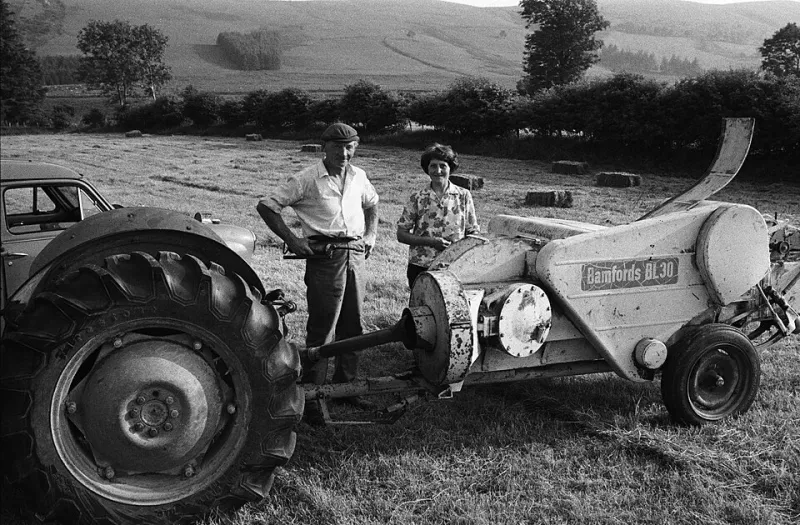
Photo: Geoff Charles, CC BY-SA 4.0, via Wikimedia Commons
In theory, neighbours are people who live nearby. In practice, they are the people who take in your parcel when you are out, drag your bin back when the wind has other ideas, and pretend not to notice when you reverse into your own hedge. The strongest streets are not built on grand gestures. They are built on five-minute favours.
That is not a soppy slogan. It is a practical theory of neighbourhood life. A street party takes a committee, a risk assessment and a rota for the gazebo. A tiny favour takes a text message and a bit of timing. Tiny favours happen far more often, which is exactly why they work. They are the everyday currency of trust.
Why small beats grand
Grand gestures are lovely, but they are also rare, visible and slightly stressful. They ask people to commit, to turn up, to bring a quiche. Micro-favours ask for almost nothing. That is their power. A favour with a clear end point is easy to say yes to: 'Can you take in a parcel today?' is a different question from 'Can you be my emergency contact for life?'
Small favours also spread the load. If one person organises everything, the street becomes a one-person show. If twenty people each do one tiny thing, the street becomes a network. And networks are more resilient. The neighbour who lends a ladder in June is more likely to be asked for help in December. The person who accepts a favour is more likely to offer one back. That is not keeping score; it is building a habit.
There is a dignity in smallness, too. Not everyone can host a barbecue or run a street party. Almost everyone can put a bin out, water a plant or pick up a parcel. Micro-neighbourliness makes room for the shy, the busy, the broke and the knackered. It is neighbourhood life for people who do not have the energy for neighbourhood life.
The favour menu
Think of these as small, time-bound offers. The time limit matters. It tells the other person that you are not signing them up for a project.
Two-minute favours. Put a bin out. Bring a bin in. Take in a parcel. Pick up a letter from the mat. Water a pot plant. Move a recycling box. Post a birthday card. Lend a phone charger for an hour.
Five-minute favours. Lend a ladder for an afternoon. Lend a drill, a hedge trimmer or a cake tin. Hold a ladder while someone clears the gutter. Help carry a sofa through a doorway. Bring in washing when the sky turns. Feed a cat for a day. Jump-start a car if you both know what you are doing.
Fifteen-minute favours. Give a lift to the station. Do a tip run with someone else's broken chair. Cover the school pick-up for one afternoon. Sit with a delivery while a neighbour runs an errand. Help weed a front garden. Take a bag of donations to the charity shop.
Notice what is missing: anything open-ended. 'Help me redecorate' is not a favour; it is a project. 'Lend me a ladder for an hour' is a favour. The clearer the boundary, the easier the yes.
Scripts that keep it easy
Most people are not awkward about favours because they are unkind. They are awkward because they do not want to impose, or because they do not know how to say no without sounding rude. A few friendly scripts can smooth the whole thing.
Offering. 'I am doing a tip run at ten — have you got anything that needs to go?' This is good because it is specific, time-bound and easy to decline. It also does not demand gratitude. If they say no, you were going anyway.
Asking. 'Any chance you could take in a parcel today? Totally fine if not — I am in from six either way.' The second sentence is the magic. It gives the other person a clean exit. It says: this is a request, not a test of our friendship.
Declining. 'I cannot do today, I am afraid — but ask me next week?' Or: 'I am up to my eyes this week, but I could do Thursday.' A warm no is much better than a reluctant yes. It keeps the relationship honest.
Following up. 'That was a lifesaver, thank you. I owe you a brew.' You do not need to repay immediately. You just need to acknowledge that someone did something kind.
Asking for nothing. If you are the neighbour who always offers, practise receiving. Let someone take your parcel in. Let someone bring your bin back. Let someone make you a cup of tea. Neighbourliness is not a one-way service; it is a swap.
The awkwardness antidote
A favour is not a contract. It is not a debt with interest. It is a small, voluntary act that makes the street work a bit better. If you start keeping a ledger, you have missed the point. The goal is not to be owed; the goal is to be known.
That means not over-asking, not assuming, and not making a favour into a test. It also means not being a martyr. If you are the person who always says yes, practise a warm no. 'I cannot this time, but I hope it goes well' is a complete sentence. You do not need to explain your whole week.
And if you are the person who never asks, start small. Ask for a ladder. Ask for a parcel. Ask for a lift to the tip. You will probably find that people are happier to help than you expected. You will also find that asking makes you more likely to notice when someone else needs a hand.
Make it street-wide
You do not need a formal scheme to make this work. A street WhatsApp group with a clear purpose is enough. A note in the window that says 'Happy to take in parcels' is enough. A shelf by the door for deliveries is enough. A 'favour-friendly' street is not one with a committee; it is one where people feel able to ask and able to say no.
So this week, do one five-minute favour. Then let someone do one for you. You might not change the world. You will change the street.