Where the Help Actually Lives: A Field Guide to the Neighbourhood Noticeboard
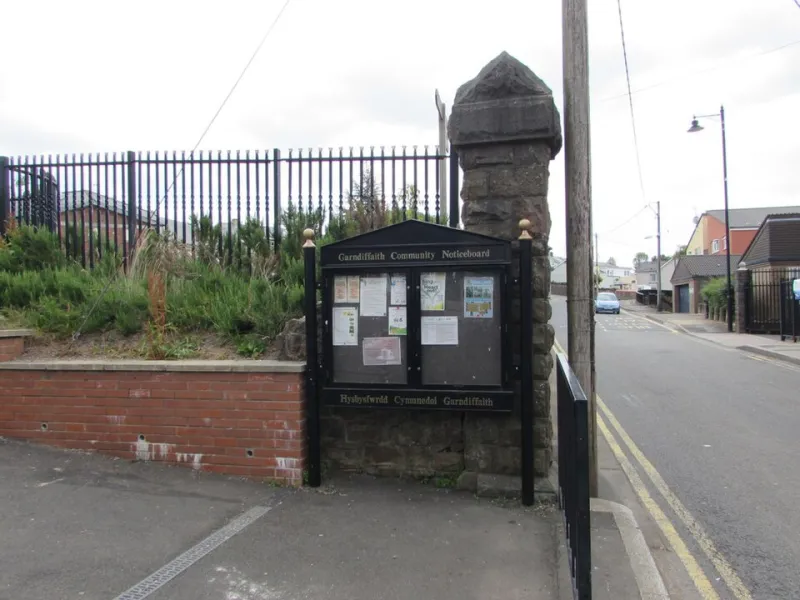
Photo: Jaggery , CC BY-SA 2.0, via Wikimedia Commons
Ask three neighbours where you find out what's going on and you'll get three different answers. One points at the library foyer. One mentions the parish newsletter that arrives with the free paper. One names a WhatsApp group they were added to by accident in 2019 and have never quite left.
None of them is wrong. That's the trouble.
Local information hasn't vanished — it has splintered. Some of it is on a corkboard behind glass, some is a laminated A4 in a chip shop window, and some is buried in a Facebook group you'll never find unless someone tells you it exists. The result is a lot of people missing out on help, events and services happening two streets away, and a lot of organisers wondering why nobody turns up.
So here's a short field guide to where the notices actually are, how to read them without wasting an afternoon, and how to post one yourself without becoming the person the street quietly mutters about.
Why the board by the door still earns its keep
It's fashionable to declare the physical noticeboard dead. It isn't. Millions of UK adults still don't use the internet in any meaningful way, and plenty more use it for messaging and shopping but wouldn't dream of joining a local group. A board in a library doorway reaches the person who has just moved in, the person who doesn't drive, the person who doesn't do social media, and the person who simply fancies something to do on Saturday.
It's also cheap. A pack of coloured cards and a marker pen costs less than a single boosted post, and nobody has ever had to accept cookies to read a poster.
Six places notices actually live
The library foyer. Still the gold standard. Libraries are open to all, warm, and staffed by people who know things. Check the board, then check the counter — the good stuff is often in a plastic wallet by the till.
Shop windows. Corner shops, post offices, launderettes, chip shops, the barber. This is where you find piano lessons, odd jobs, lost cats and the occasional minibus trip to the coast.
GP surgeries and pharmacies. Less about fun, more about flu jabs, walking groups, carer support and the sort of practical help people don't know exists until they need it.
Parish newsletters, church halls and community centres. Increasingly printed and free. Worth getting on the delivery list even if you're not remotely religious — the newsletter is often the only place a village or an estate publishes anything in full.
The school gate and the children's centre. Unofficial, fast-moving and mostly verbal, but the paper version usually appears on the board by reception.
WhatsApp and Facebook groups. Useful, but they're the fastest route to a rumour and the slowest route to a fact. Treat them as a tip-off service, not a source.
Telling signal from noise
A board is only as good as its worst poster. Four quick tests before you act on anything:
- Is it dated? No date means no confidence. Anything advertising the summer fair in November is decoration.
- Is a person or organisation named? "Local resident" is not an accountable body.
- Can you reply without an app? A phone number or an email beats a QR code nobody can focus on.
- Is it actually local? A board in one town shouldn't be pushing a service three bus rides away unless it says so plainly.
Putting your own notice up
The best thing on any board answers a question somebody is already asking. Here's how to be that notice rather than the clutter.
Ask first. Nearly every venue has a quiet rule about what goes up and where. The library desk, the shop counter and the church office will all tell you if you ask nicely. Turning up with a staple gun and a vision is not a strategy.
Say one thing. "Tuesday coffee morning, 10am, St Aidan's Hall, £2, all welcome" will outperform four paragraphs every time. If you have a phone number, make it the biggest thing on the card — not a QR code the size of a stamp.
Date it, and mean it. A notice without an end date becomes furniture within a fortnight.
Photograph it once it's up. That photo goes in the WhatsApp group, the Facebook page and the email to whoever runs the rota. One card, three channels, five minutes' work.
Then diarise taking it down. The volunteers behind the best boards are, without exception, ruthless about expiry dates.
A good week to start looking
November is a quietly excellent time to go noticeboard hunting. Christmas fairs, warm spaces, winter fuel advice, craft clubs and volunteering rotas all start appearing around now, and the boards are fresher than they've been all year. Walk one loop — library, shop, surgery, hall — and photograph anything that looks useful. Within an hour you'll have a rough map of your neighbourhood's help.
If you find a board that's clearly been left to fend for itself, treat that as an opportunity rather than a grievance. A box of drawing pins and twenty minutes is often all a revival needs, and the person who tidies the board tends to become the person who knows everyone.
That's the quiet point of all this. Your Centre isn't a building or a website — it's wherever the information actually reaches people. Sometimes that's a screen. Very often, it's a corkboard by a door.