Where to Go When You Need to Go: A High Street Loo Guide
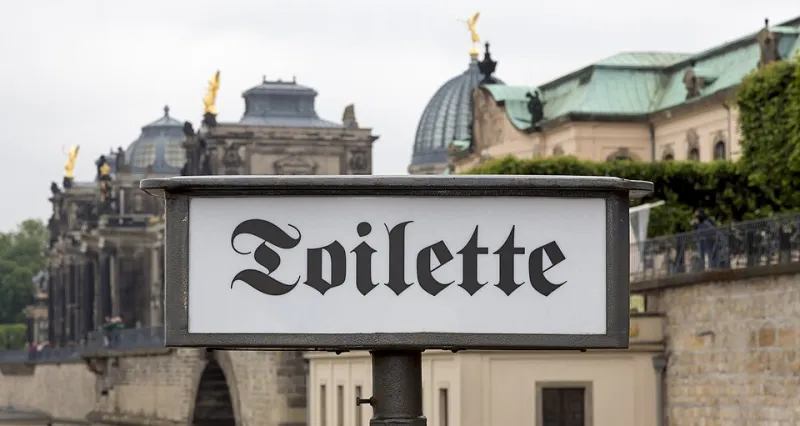
Photo: CEphoto, Uwe Aranas, CC BY-SA 3.0, via Wikimedia Commons
We spend a lot of time on this site celebrating the places that hold a neighbourhood together. Halls, libraries, community fridges, benches, bus shelters. Rarely the toilet. Which is odd, because if you ask an older resident, a parent of a three-year-old or anyone living with Crohn's disease what decides whether they go into town at all, the answer is usually plumbing.
So let us talk about it properly, without the sniggering.
The quiet infrastructure nobody budgets for
The numbers are genuinely hard to pin down, because councils record them differently and some transfer facilities to town councils or community groups before closing them. But the direction of travel is not in dispute: hundreds of council-maintained public conveniences have gone since the mid-2000s, and the ones that remain are frequently reviewed whenever a budget comes under pressure. A toilet block is easy to point at in a spreadsheet and hard to defend in a committee room, even though the people it serves are precisely those least able to drive to a retail park instead.
The result is what campaigners call the loo leash: a shrinking radius around your front door within which you feel safe going out. For some readers that radius is a whole town. For others it is two streets and a bench.
Where the council ones still are
Start by searching your local authority's website for "public conveniences" or "public toilets" rather than the word toilet on its own — the older phrasing is still the one buried in the A to Z. Look specifically at:
- Parks and country parks, often open dawn to dusk and often shut in winter.
- Libraries and leisure centres, which usually have accessible facilities and baby changing, and rarely mind a non-member walking in.
- Markets, bus stations and car parks, which is where the survivor stock tends to cluster.
- Cemeteries and crematoria, reliably overlooked and reliably open.
- Seafronts and promenades, where the seasonal opening hours catch people out every October.
One genuinely positive development: Changing Places toilets, the larger spaces with a hoist, an adult-sized changing bench and enough room for two carers, have spread well beyond a thousand sites nationally. They are mapped by the Changing Places Consortium and increasingly found in shopping centres, motorway services, museums and mainline stations. If you care for someone with complex needs, checking that map before a day out is worth ten minutes of your evening.
The informal network: places that quietly say yes
Most of the country's accessible toilets are not public at all. They are in shops, cafés, pubs and churches, and the social contract around them is looser than you might think.
Department stores and larger supermarkets are the safest bet. Ask at customer service rather than wandering.
Libraries are effectively a public service with books attached, and staff almost never turn anyone away.
Big pub chains, particularly the Wetherspoon estate, are famously relaxed about it. Smaller pubs are more likely to want you to buy a half.
Coffee shops are branch-by-branch. The courteous move is to buy something small, ask, and take the answer gracefully.
Churches, mosques and gurdwaras often have facilities and a strong ethic of hospitality — a gurdwara in particular will usually feed you as well.
Community toilet schemes are the elegant version of all this. Some councils pay local businesses a small annual grant to open their loos to the general public, then publish a list of participating premises. It costs less than running a block and spreads the provision across the high street. If your area has one, it deserves to be far better known than it is.
What a Radar Key actually does
The Radar Key — formally the National Key Scheme — is a single key sold by Disability Rights UK for a few pounds that opens thousands of accessible toilets kept locked to prevent misuse. It is not a master key to every loo in Britain. Plenty of venues simply hold the key behind the bar and will hand it over if you ask, key or no key.
If you need one, buy it direct from the scheme or from a council or disability charity that stocks it. Cheap imitations circulate online and are a false economy. If you do not need one, please do not buy one — the whole point is that the locks stay meaningful.
Other quiet tools worth knowing: the Just Can't Wait card from the Bladder & Bowel Community, which says what you need without you having to explain it out loud, and the various UK toilet-finder apps, which are only as good as their last update but are better than nothing.
Caught short: what actually works
Ask a member of staff directly rather than hovering. Be specific — "is there a toilet I could use, I'm happy to buy a coffee" does more work than a vague look. Carry a small pack: hand gel, wipes, a spare key if you have one. And if you are out with children or an older relative, adopt the three-loo rule: know your reliable stops before you set off, not when you need one.
If access is a reasonable adjustment under the Equality Act 2010 rather than a favour, say so calmly. Disabled customers have a stronger footing than the sign on the door suggests.
Why this is worth arguing about
A public toilet is not a luxury. It is the difference between a high street that a seventy-eight-year-old visits weekly and one they stop visiting altogether. It is footfall for the shops, dignity for the person with a stoma, and a reason for a family with a toddler to stay an extra hour and buy lunch.
So use the ones we have, leave them as you found them, and mention them when your council consults. Tell your councillor which block you rely on. Tell a local business that the community toilet scheme exists. It is the least romantic paragraph of any neighbourhood plan, and one of the most useful.