Between the Houses: A Friendly Field Guide to Shared Back Lanes
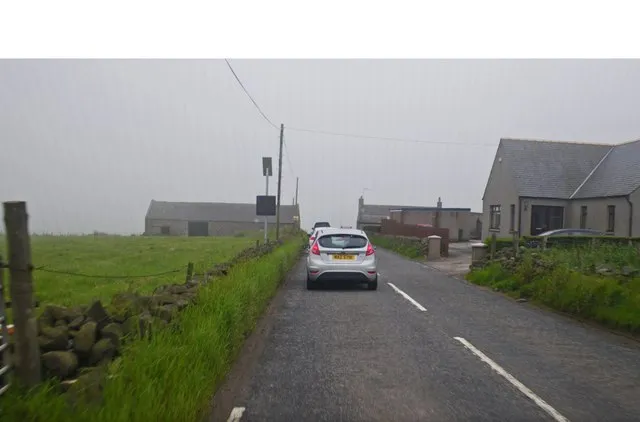
Photo: C Michael Hogan , CC BY-SA 2.0, via Wikimedia Commons
Shared passages go by many names. A ginnel in parts of the north, a snicket in Yorkshire, a twitten in Sussex, a close or a vennel elsewhere. Whatever you call it, the useful ones have a habit of feeling obvious and invisible at the same time. They get you to the shop without the long way round. They take the wheelie bin out of the front garden. They give a cat somewhere to conduct its business. And then, one day, a gate appears, or a hedge leans in, or a light stops working, and everyone remembers the lane exists.
This is not a call to march down your alley with a clipboard and a high-vis vest. It is a low-key invitation to look at the route you already use, work out what is actually shared, and start a sensible conversation before a small irritation turns into a boundary feud.
Start with a walk, not a clipboard
Pick a dry afternoon and walk the lane from end to end. Go both ways. Notice what you actually see rather than what you assume. Is the surface even, or is there a puddle that has been there since the last heavy rain? Are the bins out on the right day, or are they parked in the narrowest bit for the rest of the week? Does the lighting work, and does it feel adequate at dusk? Is there a gate across the route, and if so, is it open, locked, or tied back with baler twine?
You do not need to solve anything on this walk. The point is to build a picture. If you have neighbours who use the lane too, ask them what they notice. People often have one specific gripe — the dog mess, the overhanging bramble, the car that parks across the entrance — and a lot of general affection for the route. Both are useful.
Who owns what, and why it matters
This is the bit that trips people up. A back lane can be adopted highway, unadopted highway, private land with a right of way, or a mix of all three along its length. The clue is often in the maintenance. If the council grits it, empties bins from it or repairs the surface, that tells you something. If residents have quietly cut the hedge for twenty years, that tells you something else.
You do not need to become a land law expert. But before anyone starts talking about “rights”, it helps to know whether you are dealing with a public route, a private shared access, or a footpath. Your council’s highways team can usually say whether a lane is adopted. The local authority rights of way officer can help with public footpaths. The Land Registry can tell you who owns registered land, for a fee. If the lane is unregistered or the ownership is murky, that is not a reason to panic. It is a reason to keep the conversation friendly and the paper trail light.
The gate question
Gates are the classic flashpoint. Someone installs one for security, or to keep a dog in, or because they are fed up with fly-tipping. Someone else finds that their bin store is now behind a lock they do not have a key to. The result is a lot of huffing in the post office queue.
A useful first question is: what is the gate for? Security, pets, bin access, noise, or simply a boundary marker? Then: who needs to get through it, and when? If the route is a public right of way, blocking it is not a neighbourhood matter — it is a legal one, and the council should be asked. If it is a private shared access, the people who use it need a workable arrangement, not a silent lock-in.
Try not to lead with “you can’t do that”. Lead with “can I check how the gate is meant to work?” It is amazing how often the answer is “oh, we didn’t realise anyone else used that bit”. Most gate disputes are not about malice. They are about someone solving their own problem without seeing the whole route.
Light, bins and the humble drain
Lighting is another quiet source of friction. A dark lane feels unsafe; a bright light shining into a bedroom feels antisocial. If a light is broken, note the pole number or nearest house and report it to the council or the owner. If a new light has appeared, ask who installed it and whether it can be angled or shielded. You are not being fussy. You are doing the ordinary work of sharing a space.
Bins deserve their own paragraph. In narrow lanes, bin day can turn a comfortable passage into an obstacle course. A simple agreement about where bins go — and when they come back in — can make the route easier for everyone, including the bin crew. If the lane is used by people with buggies, wheelchairs or mobility scooters, that matters even more. Access is not a niche concern. It is the whole point of a cut-through.
And while you are looking down, check the drain. A blocked gully in a shared alley can send water into a wall or a doorway. A quick report to the council’s highways team, with a photo and a clear location, is usually enough to get it on the list.
Overgrowth and the art of the light trim
Overgrowth is the neighbourly equivalent of a slow kettle. It never quite boils over, but it makes everything take longer. A bramble that catches a coat sleeve in June is a scratched arm in September. A hedge that narrows the route by a foot is a problem for anyone with a pushchair.
The temptation is to cut it back yourself and say nothing. Sometimes that is fine, especially if the growth is clearly from your side and you are keeping it tidy. But if you are cutting someone else’s hedge or a plant of uncertain ownership, a quick knock and a friendly word is better than a surprise haircut. “I’m just clearing the bit by my gate — do you want me to leave your side alone?” is a good opener. It signals that you are not on a mission, just keeping the route usable.
If the overgrowth is from council land or a neighbouring property that is empty, report it rather than wrestling with it. Take a photo. Note the address or the nearest landmark. Councils are more responsive when the report is specific.
Access for everyone
A shared lane is not just a shortcut for the able-bodied. It is a route to the bus stop, the school, the shop, the allotment, the friend who lives two streets over. That means the standard should be: can a person with a walking aid, a wheelchair, a pram or a shopping trolley get through without a struggle?
That question changes how you see a parked car, a propped-open gate, a pile of garden waste or a wheelie bin left out for three days. None of these are crimes. But they add up. A lane that works for the most vulnerable user tends to work for everyone else too.
Write it down without making it official
You do not need a formal committee. A single page of notes is enough: a simple sketch of the route, the names of the properties that front onto it, the location of lights and drains, and a short list of what needs attention. Keep it factual. “Light out at rear of 14–16” is more useful than “lighting is a disgrace”. “Gate at north end locked, no key for bin access” is a starting point, not a verdict.
If you want to share it, a small group chat or a note through the door works better than a public post that names people. The aim is to build a shared picture, not a dossier. You are trying to make the lane legible to the people who use it, so that the next conversation starts from the same map.
A conversation opener that works
When you do need to talk about a specific issue, try the three-part approach. First, say what you have noticed, without blame: “I’ve been walking the lane with the pram and the bit by the gate is quite tight.” Second, ask what they see: “Is that gate normally locked, or is it just while the dog is out?” Third, suggest something small: “Would it help if we kept the key in a lockbox, or left it on the latch during bin day?”
That is not a technique for winning an argument. It is a way of finding out what the other person is dealing with. Most people are not trying to make the lane worse. They are trying to make their own bit of it work.
When to ask the council
Some things are not neighbourly conversations. A blocked public right of way, a dangerous wall, a fly-tipping hotspot, a light that has been out for months, or a gate that has been locked across a public route — these are council matters. Report them with a photo, a location and a clear description. Keep a note of the reference number. If nothing happens, follow up. Councils are stretched, but a specific, calm report is more likely to get a response than a general complaint.
Small route, big difference
A shared alley is one of the last bits of genuinely informal public space in a lot of neighbourhoods. It is not a park, a square or a high street. It is a gap between things. But it is also a daily route, a bin store, a cat run and a place where neighbours bump into each other without arranging to.
Looking after it does not require a grand plan. It requires a walk, a few notes and the willingness to knock on a door before you get annoyed. The gate that isn’t yours is still part of your route. The lane between the houses is still a piece of shared ground. Treat it like one, and it will keep doing its quiet job for another year.