Seat Yourself: A Field Guide to Judging Your Local Benches
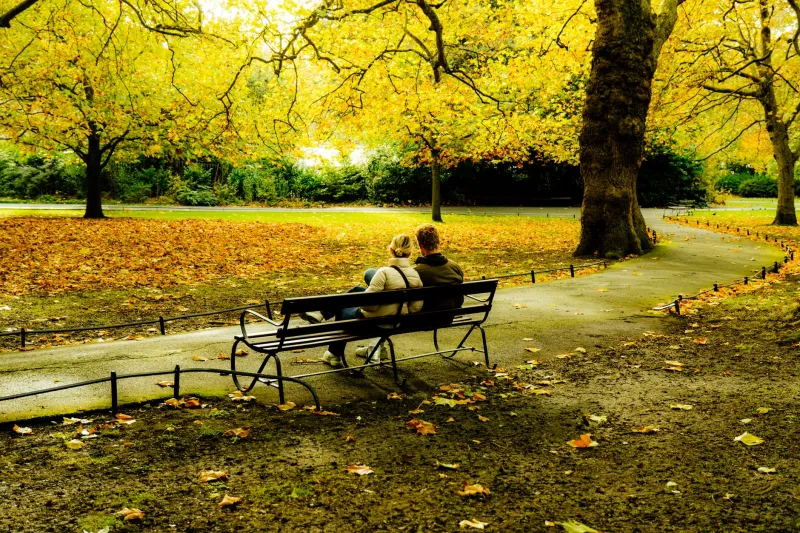
Somewhere between the bus stop and the bakery, the public bench is quietly doing one of the most useful jobs on the high street. It gives tired legs a rest, gives neighbours a chance to nod hello, and gives anyone with a flask of tea a front-row seat to the world going by. Yet we rarely ask whether our benches are actually any good.
So here is a gentle challenge for 2026: spend an afternoon auditing the seats in your patch. Not with a clipboard and a hi-vis jacket — unless that is your thing — but with a scoring sheet, a bit of curiosity and maybe a friend. Think of it as a bench crawl, minus the pub at the end.
The six-point bench score
Give each bench a mark from 1 to 5 in six categories. A perfect 30 is a rare thing; anything above 20 is worth guarding with your life.
Comfort. Does the seat height suit a range of bottoms and knees? Are the slats sound, the backrest angled kindly, and the armrests actually usable? A bench that tips you forward like a shopping trolley loses points.
Company. How many people can sit without performing a small miracle of contortion? Is there space for a buggy, a shopping bag or a dog to flop underneath? Benches are social furniture, not just perches.
View. A decent view does not have to mean a cathedral spire. A strip of sky, a bit of greenery, a busker or a decent people-watching angle all count. If the only thing to look at is a bin with its lid flapping, mark it down.
Shade and shelter. In a British summer, shade matters. In a British winter, shelter matters more. Is there a tree, an awning, a wall or a hedge nearby? A bench that catches full sun at noon and full wind at four is a bench for the committed only.
Accessibility. Can a wheelchair user pull up alongside? Is there level access from the pavement, or a kerb to negotiate? Are there armrests for someone who needs them? Is the ground free of trip hazards and puddles? A bench that only works for the nimble is not really a public bench.
Nearby amenities. A loo, a cafe, a bin, a crossing, a bus stop — these things turn a seat into a proper resting point. A bench with no bin within sight is a bench that will collect litter. A bench with no loo nearby is a bench for short visits.
Reading your scores
Under 12: a bench of last resort. Sit only if desperate, and report the worst faults.
12 to 18: perfectly serviceable, but not a destination. Good for a five-minute pause.
19 to 24: a proper local asset. This is the bench you show visitors.
25 to 30: a neighbourhood jewel. Consider yourself lucky, and consider whether it needs a friend.
From scorecard to small win
An audit is not just a moan with a spreadsheet. It is a shopping list for improvements. If a bench is broken, wobbly or missing slats, report it to whoever owns the land — your council, your parish council, a housing association, a park friends group or the manager of the shopping centre. A polite email with a photo, the exact location and a specific ask goes a long way. Try: 'The bench by the north gate has two broken slats and a loose armrest; please could it be repaired before winter?' That is much easier to act on than 'the benches are rubbish'.
If you want more shade, ask whether a tree can be planted nearby. If the bench is in the wrong place, suggest a move. If there is no bench at all, ask for one. Local councillors hold surgeries, parish councils have open meetings, and friends groups often have a small budget for exactly this sort of thing. You do not need a campaign; you need a photograph and a reasonable request. And if you can, offer to help — a bench that is adopted by local people is a bench that gets looked after.
Start a bench buddy group
The other way to improve your benches is to use them. A bench buddy group is a loose, friendly walking group with seats as its stops. It is ideal for anyone who wants a bit of company, a gentle stretch of exercise or an excuse to leave the house. Here is how to start one.
Pick a route with three or four benches, ideally within 20 minutes of each other. Choose a time and day that suits retired people, shift workers and anyone who is not in a rush. Put a note on the community noticeboard, the library board and the street WhatsApp group. Say what it is: a bench-to-bench wander, 45 minutes, no pressure, all welcome. Meet at the first bench. Walk. Sit. Chat. Repeat.
You do not need a constitution, a treasurer or a branded lanyard. You need one person to turn up first and a second person to turn up next time. If it rains, sit under shelter or move it to Tuesday. If only one person comes, that is still a bench buddy group of one, and it still counts.
A small seat with a big job
Benches are easy to ignore until you need one. Then they become the most important piece of street furniture in town. So this month, score the seats on your usual walk. Send one email about the wobbly one. Invite one neighbour to sit down. The humble bench will do the rest.